
Brad Lander
October 30, 2026 · Newsletter
The valley of the destroyed communities
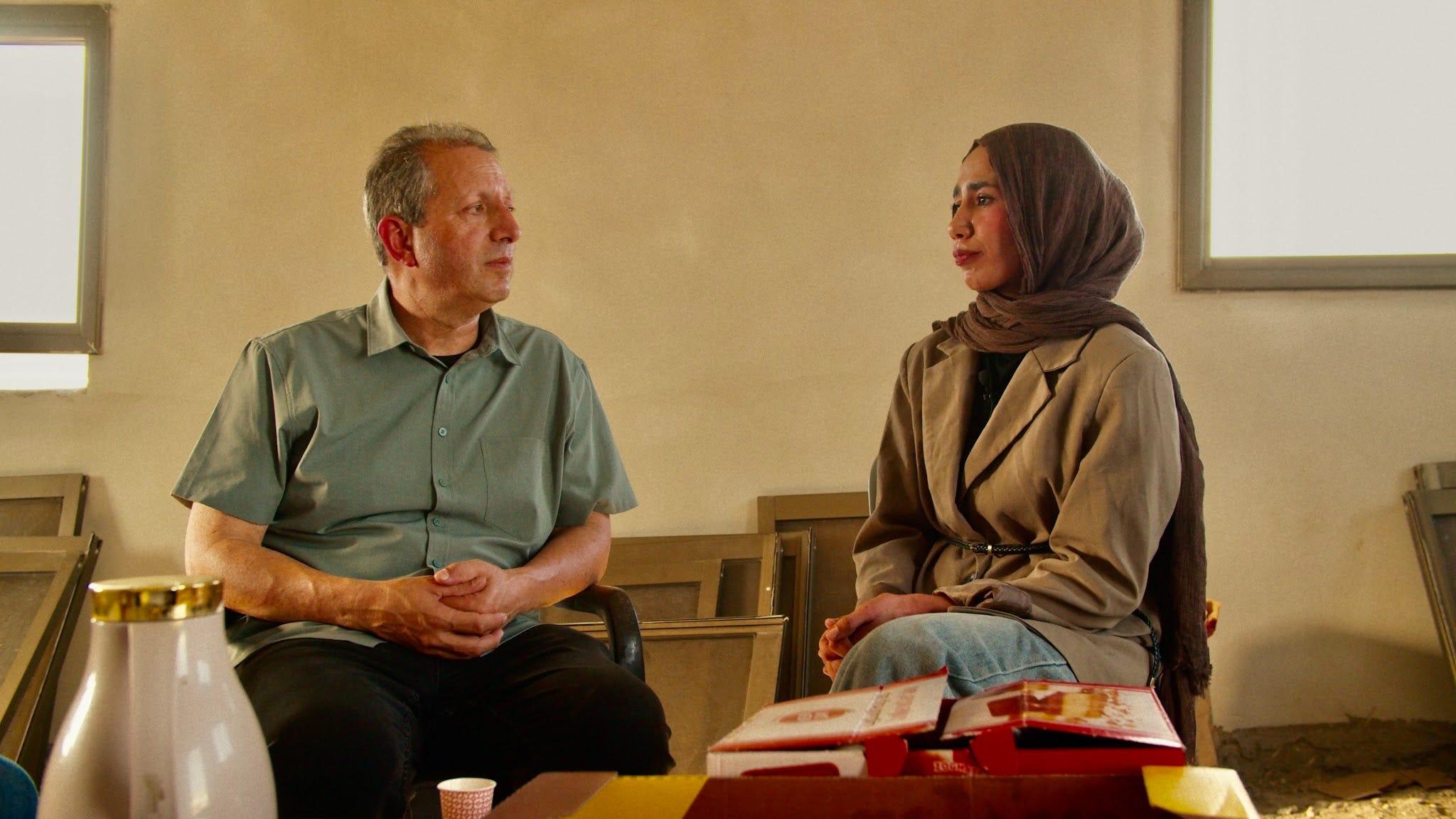
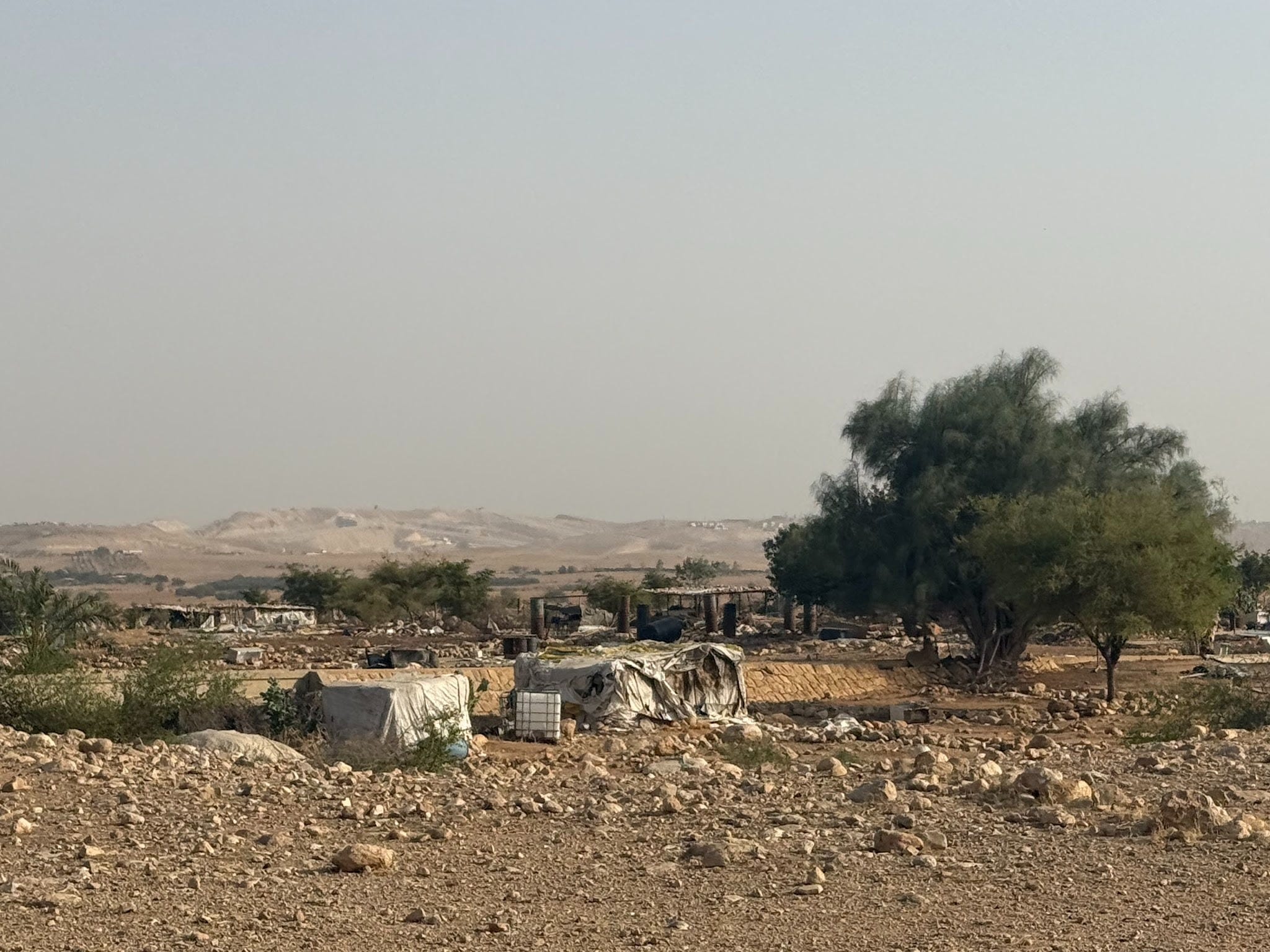
A week ago today, I concluded my trip to the West Bank in the Jordan Valley, north of Jericho, in the most harrowing place I visited. In a barren refugee compound in the blazing sun, without any running water, a 29-year-old Bedouin woman named Aliya told me the story of what happened to her village, Mu’arrajat, and the nearby village of Ras-Ein El’Auja.
Until recently, these were thriving Bedouin communities where several hundred families had lived for generations. Over the past several years, harassment by Israeli settlers had escalated, but they were committed to remain in their homes.
Then last spring, settlers established an outpost just yards from Mu’arrajat. One day, they attacked the elementary school. Residents pleaded to Israeli soldiers in the area for protection, and they were told it would be provided – but only during the day.
So one night last July, settlers — no, terrorists — came and burned their homes, one by one. When the pogrom was over, every house was destroyed, and every family displaced.
The same thing happened in Ras-Ein El’Auja. They are now ghost villages, with ruined and abandoned homes, that I saw with my own eyes.
You may have heard that I was detained last Wednesday by Israeli soldiers. I was one of about 70 people – rabbis, American and Israeli Jews, and Palestinians – helping Palestinian farmers harvest trees their family has owned for generations.
My detention made headlines. But it’s not the story. Nor is our olive harvesting. The story is the ethnic cleansing of the West Bank.
After a week’s reflection (which included the Israeli elections) I wanted to give a summary of what I saw. And what I commit to do about it.
Stolen Olive Groves, Land and Livestock
The olive grove we were harvesting when we were detained has been owned by Palestinian families in Nahalin (a village near Bethlehem) for generations — but they have not felt safe to harvest it for the past three years, because of the threat of attack from Israeli settlers who live nearby.
Violent assaults on Palestinian farmers take place every day. In recent weeks across the West Bank, settlers have attacked Palestinian farmers, volunteers, European diplomats, a Washington Post journalist, and yesterday Jasper Nathaniel, a U.S. journalist who lives in NY-10.
In our case, though, when security guards from the adjacent settlement of Beitar Ilit spotted us, they didn’t confront us themselves. Instead, they called the Israeli army, and soldiers detained us for harvesting olives on private Palestinian land at the invitation of its owners. To be clear, we were doing nothing illegal nor anything that required coordination with the Israeli government.
Of the 70 folks I was detained alongside, the IDF soldiers held a Palestinian woman from the family who owns the land longest of all. Their message was clear: don’t try to harvest that land again.
What I saw in Nahalin is part of a broader pattern I saw across the West Bank: settler violence and state power working hand in hand to dispossess Palestinians of their land and expel them from their homes. This isn’t just the work of a handful of “hilltop youth.” There is full collusion by the government and the IDF.
In Mughayir, the sister village of my Brooklyn synagogue Kolot Synagogue, families once farmed olives and dates and grazed flocks on land stretching for miles. Today, the village has been stripped of nearly all of it — by a government order that uprooted its olive trees, by a permanently locked gate cutting it off from the main road and by attacks from nearby settler outposts. One older man was assaulted and pepper sprayed earlier this month by settlers, just for walking into one of his few remaining fields. Mugayyir has been choked of its sustenance by the occupation.
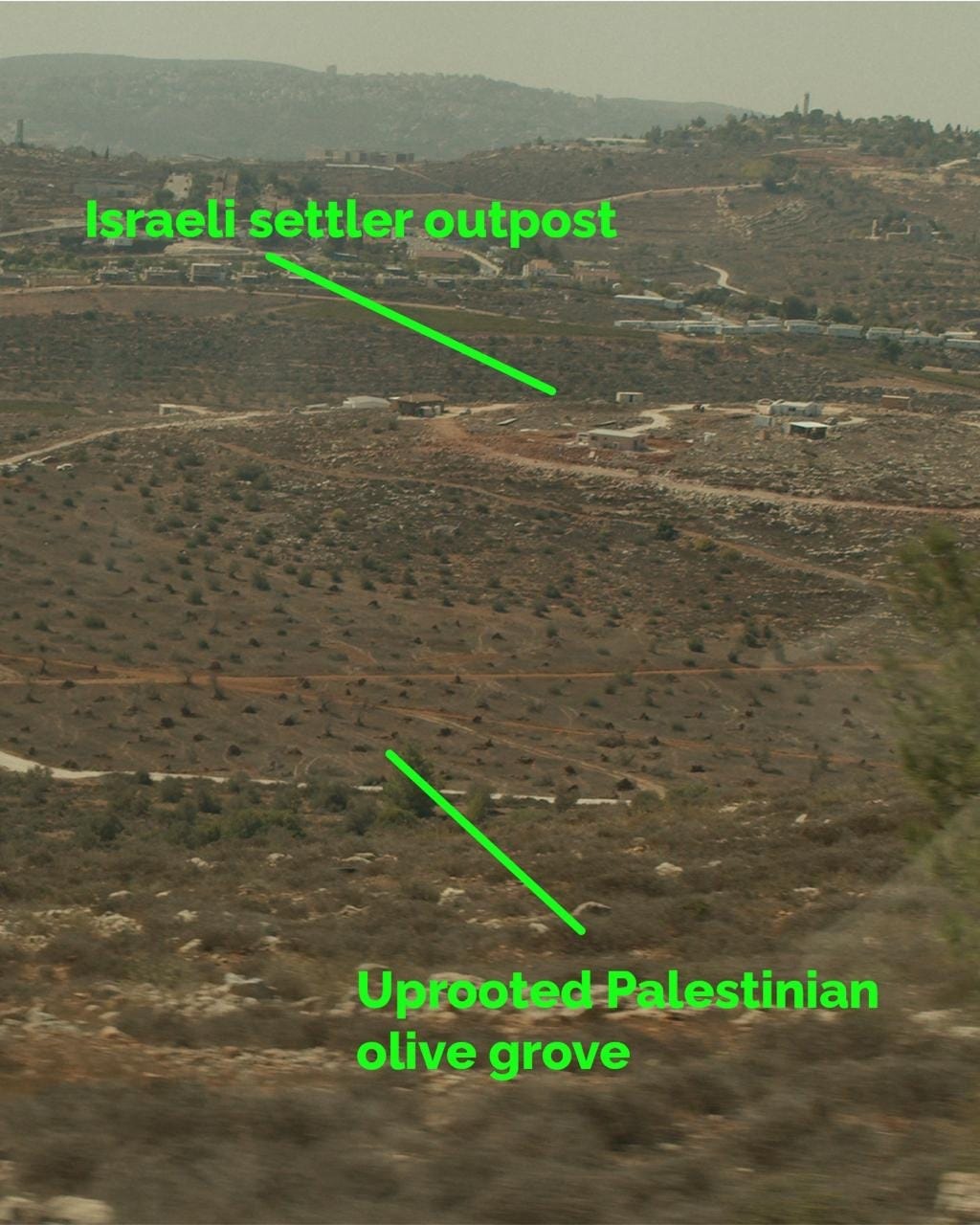
In Taibe, a shepherd showed me a video of settlers and soldiers raiding his compound at night, beating his family and taking 40 of his sheep on a newly arrived settler’s claim that they were his. I saw and heard the same in Turmus Aya and Mikhmas.
These are not isolated incidents. A recent report by Peace Now and Kerem Navo found that settler terrorism, combined with Israeli government policy, have made more than 1 million dunams of land – roughly 18% of the West Bank – inaccessible to Palestinians, and displaced over 100 communities.
The Infrastructure of Occupation
In Al-Walaja, a Palestinian village in East Jerusalem which I visited along with rabbis traveling with T’ruah, the harsh tool of displacement is urban planning. For over a decade, residents have sought approval of a zoning plan for their village. The Israeli authorities have refused to grant it without explanation — a recurring dynamic in Palestinian communities — only to then cite the missing zoning plan as an excuse to demolish their homes (there is no “security” rationale given as part of the orders).
Half the village is under demolition orders. One home, belonging to a family with three small children, was destroyed the morning of the day we visited. Just yesterday, Rabbi Jill Jacobs of T’ruah sent this photo of yet another.
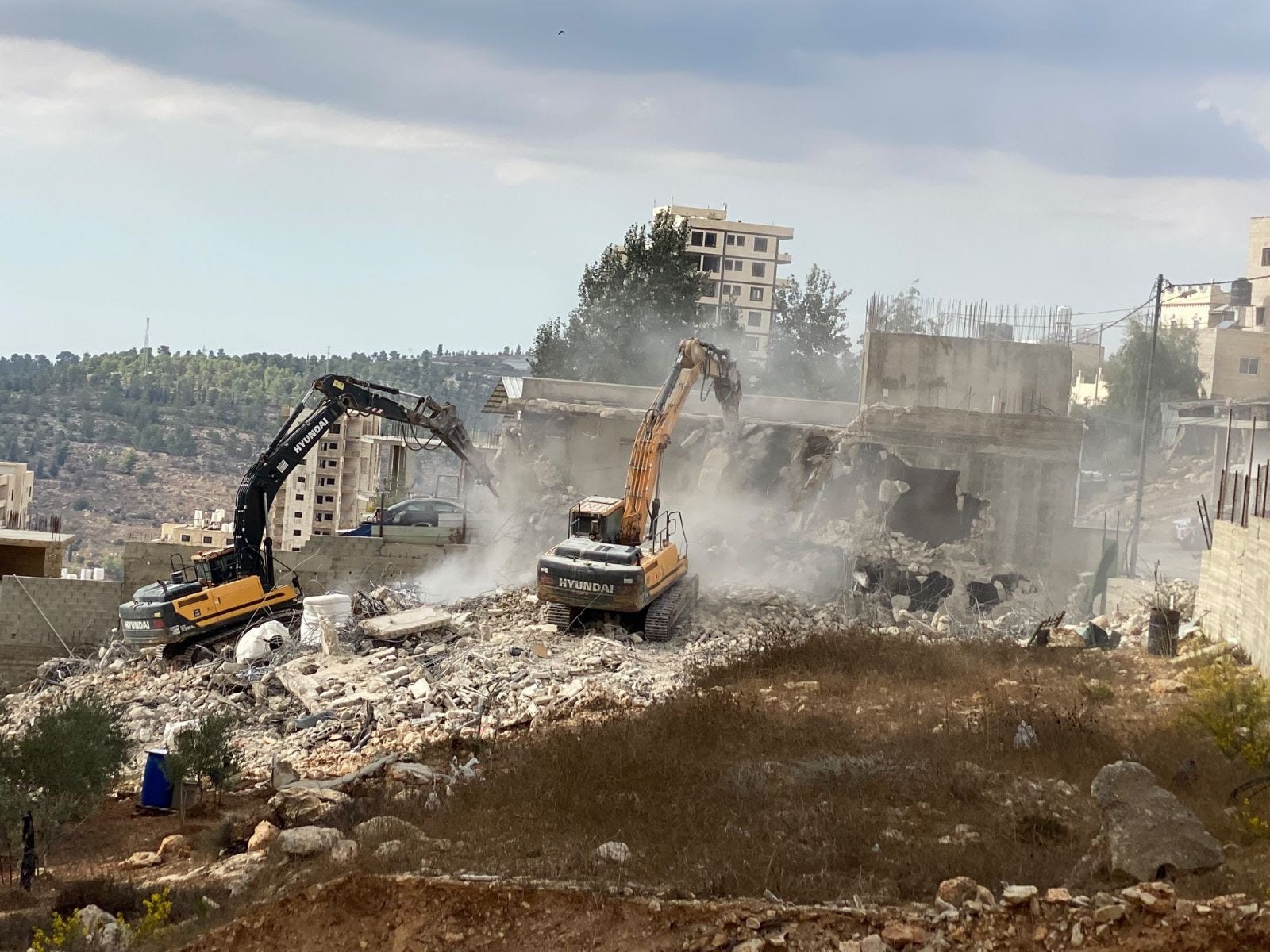
Residents pay taxes to the Jerusalem municipality. But the main government service they receive is the bulldozer.
All across the West Bank, we saw the “separation barrier” — a giant fence — designed to fence Palestinians in, and maximize the opportunity for Israel to build new settlements or take over farmland. In Beit Ijza, the barrier winds fully 360 degrees around the Gharieb family home, forming a cage for them that was created to facilitate the development of the Israeli settlement of Givon HaHadasha all around them, on land where their Palestinian neighbors had once lived.
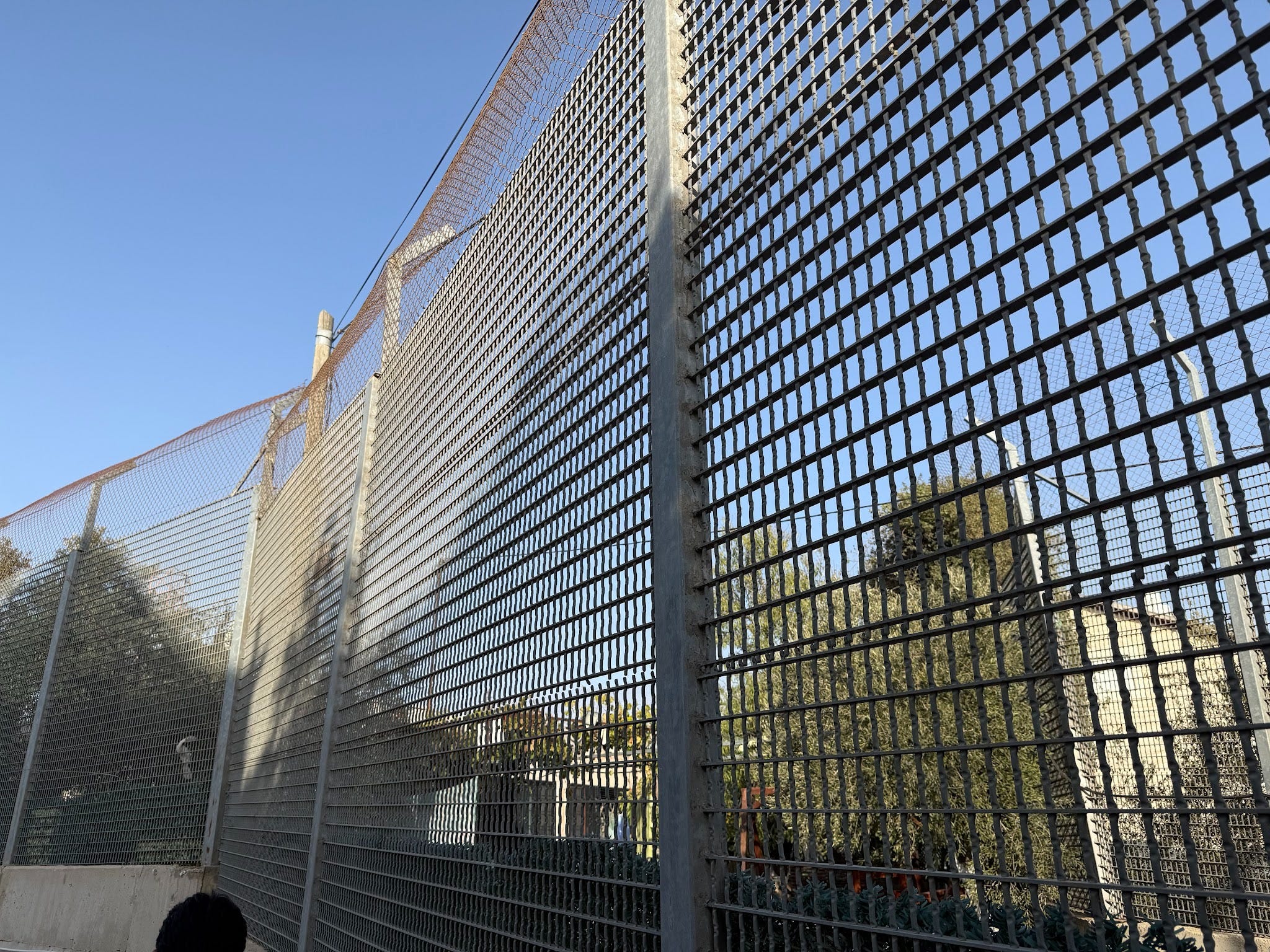
Even the roads are segregated. Massive road construction projects facilitate smooth settler travel throughout the West Bank, and into and out of Israel — while leaving Palestinians on separate, inferior roads clogged with traffic.
Valley of the Destroyed Communities
As I stood in the ruins of Mu’arrajat and Ras-Ein El’Auja, and listened to Aliya’s story, an image jumped into my mind. On several of my previous trips to Israel, I have visited Yad Vashem, Israel’s national Holocaust memorial. One part that affected me most vividly is the “Valley of the Destroyed Communities,” a memorial to the 5,000 communities in Eastern Europe, where millions of Jews lived, that were obliterated by the Nazis.
Mu’arrajat and Ras-Ein El’Auja are now in the valley of the destroyed communities.
The Need to Listen to Palestinian Voices
Despite it all, Aliya is studying remotely for her Master’s Degree from her refugee compound. No one in her family has ever gone to college. I wish voices like hers, and so many other Palestinians, could be heard more loudly, without it taking the detention of a Congressmember-to-be or a group of rabbis.
People like Amira Musallam, Head of Mission with Unarmed Civilian Protection in Palestine, with whom I traveled this week.
Like Aziz Abu Sarah, a steering committee member of Protect the Harvest, whose brother died after being beaten in IDF custody, and who is the recent co-author with Maoz Inon of The Future is Peace.
Like George Seidan, the country director for Palestine for the Carter Center, a brilliant activist, and the founder of Right to Move Palestine, who I met in Beit Jala, who pushed me not to allow current obstacles to cause us to miss the moment to push for Palestinian self-determination.
Like Khalil Sayegh, or Muhammad Shehada, both of whom spoke up when I was shouted down earlier this fall opposing Hindutva violence.
And of course there are so many others whose voices we are failing to hear (please feel free to suggest more for me to read).
What Path Forward?
As we were leaving last Friday, two Palestinian gunmen in Hebron attacked and killed two Israeli soldiers and wounded several others, and then were killed themselves. I mourned the killings, and prayed for the recovery of those who were injured.
While Israel’s occupation of the West Bank imposes violence on a daily basis, I don’t believe that violence is the path to ending it — or to achieving safety, freedom, and peace for both Palestinians and Israelis.
In my statement, I condemned the collective punishment that Netanyahu had pledged and is now delivering (more than 3,000 people have already been evicted from their homes) saying that I opposed “punishing millions of people for the criminal act of two.”
I want to correct one thing here: I should not have called this a “criminal” act. It is a war crime to target civilians (as Netanyahu, Ben Gvir, and Smotrich are now doing in retaliation) — but under international law, it is not considered a criminal act to target soldiers of an occupying power.
I stand by the rest of my statement. The Israeli soldiers had families who loved them, and full lives ahead of them. And so did the Palestinians who killed them. I wish the attack had never happened, that all four of them were still alive today, no killers and no killed.
An endless cycle of violence between combatants may be permissible under the Geneva Conventions, but it is not the future I hope for Palestinians or Israelis.
That raises a hard and critical question: how will we end the occupation, nearly entering its seventh decade, and establish Palestinian freedom and human rights, and peace and security for all?
I wish that the Israeli elections this week offered a path. But neither prospective coalition is promising to stop settlement construction, end ongoing occupation and apartheid or protect the human rights of Palestinians — much less recognize a Palestinian state. And, of course, none of the Palestinians I met in the West Bank could vote, even though the resulting government controls their lives.
Despite those realities, Palestinian citizens of Israel turned out in record numbers. Together with Israeli voters for the opposition parties, a clear majority of citizens of Israel voted against Netanyahu.
If Gadi Eisenkot and the opposition bloc are serious about getting rid of Netanyahu, and about Israel’s democratic future, they’ll do the obvious, strategic, and non-racist thing, and work to form a government with the Arab parties. A political partnership of Jewish and Palestinian citizens of Israel is necessary to meet this moment, and for any path to a shared future.
Closer to home, our midterm elections also offer an opportunity to demand change. We are not bystanders to ethnic cleansing in Palestine: our tax dollars help underwrite it.
In Congress, I will work to end U.S. military aid to Israel while it violates international law and Palestinian human rights. I will support the Stop the Settlements bill to ban trade and impose sanctions on companies who build and bankroll the settlements — something U.K. Foreign Secretary Ed Miliband (another proud diaspora Jew) recently announced. I will support recognition of a Palestinian state as U.S. policy.
And I promise to work strategically, in the kind of “inside/outside” campaign that I’ve long believed is necessary for any change, with colleagues in Congress, and with a broad coalition of American Jewish and Muslim groups that don’t always agree with one another, but who are committed to ending the occupation: groups including JStreet (whose leadership summit I attended this past weekend, and with whom I hope to return to Israel and Palestine on a delegation in the new year, if Israel will un-revoke my travel authorization), Jewish Voice for Peace (who I joined to protest Netanyahu’s visit earlier this fall), T’ruah, A New Policy PAC, the Institute for Middle East Understanding (IMEU), Fig & Olive. And with so many of the extraordinary people I met this week — Palestinians and Israelis and Americans and beyond — to move forward on a path toward justice, freedom, and peace, speedily and in our day.
Before I left the West Bank, I spoke with a group of Palestinian high school students at the Talitha Kumi school in Beit Jala. Most speak Arabic, Hebrew, German and excellent English. They experience injustice on a daily basis. Their families can’t vote, but still they told me about their Model UN. They want a free Palestine, but they also believe in democracy and want to live peacefully alongside Israelis. They were glad to learn I’m Jewish, and they thanked me for being there.
They were even more excited to learn that I was friends with Mayor Mamdani, and they were thrilled when I suggested we make a video message to him.
There are, to be sure, many complex issues in resolving the conflict between Israelis and Palestinians.
But don’t let anyone tell you that these kids are being raised on hatred (I mean, just look at them).
Or that they deserve a future any less bright than your kids or mine.
Or that it’s “democratic” that their families aren’t allowed to vote for the government that rules their lives.
Or that it’s consistent with Jewish values to steal their land (as an Israeli rabbi had the gall to claim last week).
Or that it’s a good use of our tax dollars to fund their subordination.
Or that we can’t find partners for peace.
Brad
P.S. Thank you to the fantastic team from Protect the Harvest for organizing this effort. To Tamar Glezerman of Israelis for Peace NYC and Amira Musallam of Unarmed Civilian Protection in Palestine, for inviting and traveling with me. To T’ruah, for organizing the rabbis delegation we traveled with. To the Israelis human rights activists who travelled with me throughout the West Bank. And especially to the Palestinians who welcomed me in their homes, villages, and olive groves. I won’t forget it, or the obligation that comes with it.