
Brad Lander
October 20, 2026 · Newsletter
Why We’re in the West Bank this Week to “Protect the Harvest”
Two weeks ago, you may have seen a video of us together in Union Square, alongside Mayor Mamdani at a memorial vigil on October 7th. Despite the loud chants of counter-protestors, we read many heartwrenching testimonials — of Israeli family members whose loved ones were killed on October 7th, of Palestinians families whose loved ones were killed in the three years since, and of those still struggling to survive. We said Kaddish for all of the lives lost.
One of those readings was a plea from Amira Musallam, a Palestinian activist from Bethlehem, to the international community not to ignore settler terrorism in the West Bank. So it’s fitting that his week, we’re together with Amira in the West Bank — as part of the “Protect the Harvest” delegation, which is bringing hundreds of people from the U.S. and around the world to help Palestinian farmers harvest olives, in the face of ongoing, escalating, state-sanctioned and often army-facilitated settler violence.
The two of us have gotten to know each other, to organize together, and to bear witness over the agonizing last three years. In the weeks following Hamas’ attack on October 7th, Tamar and other Israeli peace activists started organizing a weekly vigil mourning the lives lost, calling for the return of the hostages, and demanding a ceasefire in Gaza — vigils that continued weekly as the destruction of Gaza became a genocide before our eyes.
Although the carnage in Gaza drew many eyes away from settler violence in the West Bank, it’s been a focus of the Israelis for Peace vigils in Union Square from the beginning. Amira spoke in person at one of them in 2024.
Israeli settlements in the West Bank have always been illegal under international law, but they have grown steadily over the decades since 1967, stealing Palestinian land, and making life increasingly difficult amidst military occupation.
Since the election of the current government in late 2022 (with Itamar Ben Gvir as the minister for policing in the West Bank), and especially since October 7th, settler violence has grown to ever greater levels. More than 60 Palestinian communities, over 4,000 people, have been displaced from their homes. Dozens of people have been killed, homes destroyed, and olive groves burned, as part of efforts to ethnically cleanse the West Bank. IDF soldiers routinely look out for the safety of the settlers and often arrest, attack or even kill the Palestinian farmers who are being attacked. When the settlers commit violence, they are almost never held accountable — only 3% of the cases are even investigated.
The situation has deteriorated even further over the past few weeks during the olive harvest (a critical window for Palestinian families, who rely on the income to survive) and in the run-up to the Israeli elections. Over the past month, there have been an average of 20 settler attacks per day, including the one last Friday where Heidi Levine, a Washington Post reporter, was beaten, and a local Palestinian farmer was shot while trying get away from the attackers. And another over the weekend at which a delegation of European diplomats was attacked, for which the army was alerted but ignored the distress calls.
That’s why we decided to join the “Protect the Harvest” delegation — largely, but not entirely, American Jews (including a delegation of rabbis from T’ruah) who are joining Israeli and Palestinian activists to support Palestinian farmers.
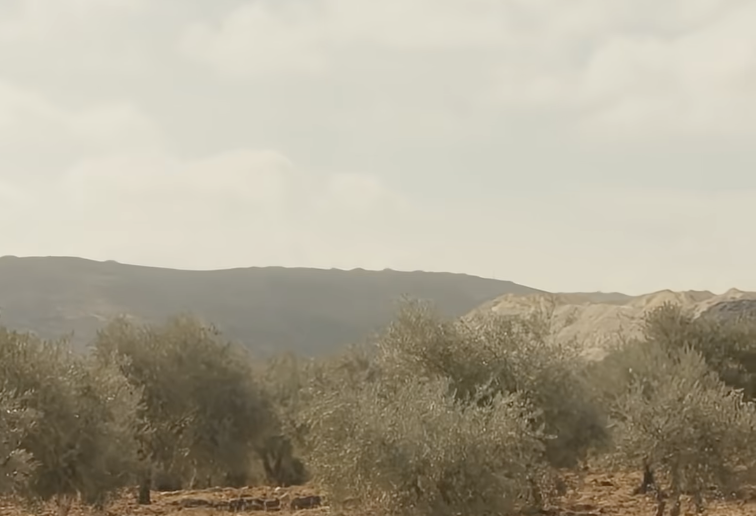
As we’re writing this, we just completed our first day’s harvest, and thankfully, it was peaceful and successful. Our group harvested many trees, yielding many bags full of olives, that the Palestinians farmers who own the grove will be able to sell. Brad especially enjoyed climbing the trees to harvest olives in the upper branches. For today, we did not encounter any settlers or soldiers.
But the violence wasn’t far away. We heard the story of a family whose burned out house sits just above the olive grove — earlier this year, settlers attacked the family, including a mom and two small kids, while her husband was working at a factory nearby.
And today, while we were harvesting without incident, settlers attacked the harvest in Turmus Ayya, injuring an American citizen, and setting a home and a car on fire. In Qaryut, settlers were firing live ammunition in the center of the village. In Jalud, they attempted to take over a local school full of children. In Burqa, they attacked olive farmers and chased them from their land. All of this happened today. The violence is non-stop.
Our goals for the trip are to help protect the olive harvest — and to shed a light on the reality of the occupation. To ensure that international solidarity goes beyond the harvest, to become a sustained commitment to protecting Palestinian communities from settler violence, forced displacement, and the ongoing threats to their right to remain on their land. And, speedily and in our day, to secure human rights, safety, equality & freedom for both Palestinians and Israelis.
We’ll keep you posted on our efforts this week, especially the stories we hear from Palestinians on the ground. Protect the Harvest.
Brad Lander is the Democratic Nominee for Congress in NY-10. Tamar Glezerman is the co-founder of Israelis for Peace.