
Brad Lander
September 11, 2026 · Newsletter
Twenty-five years on
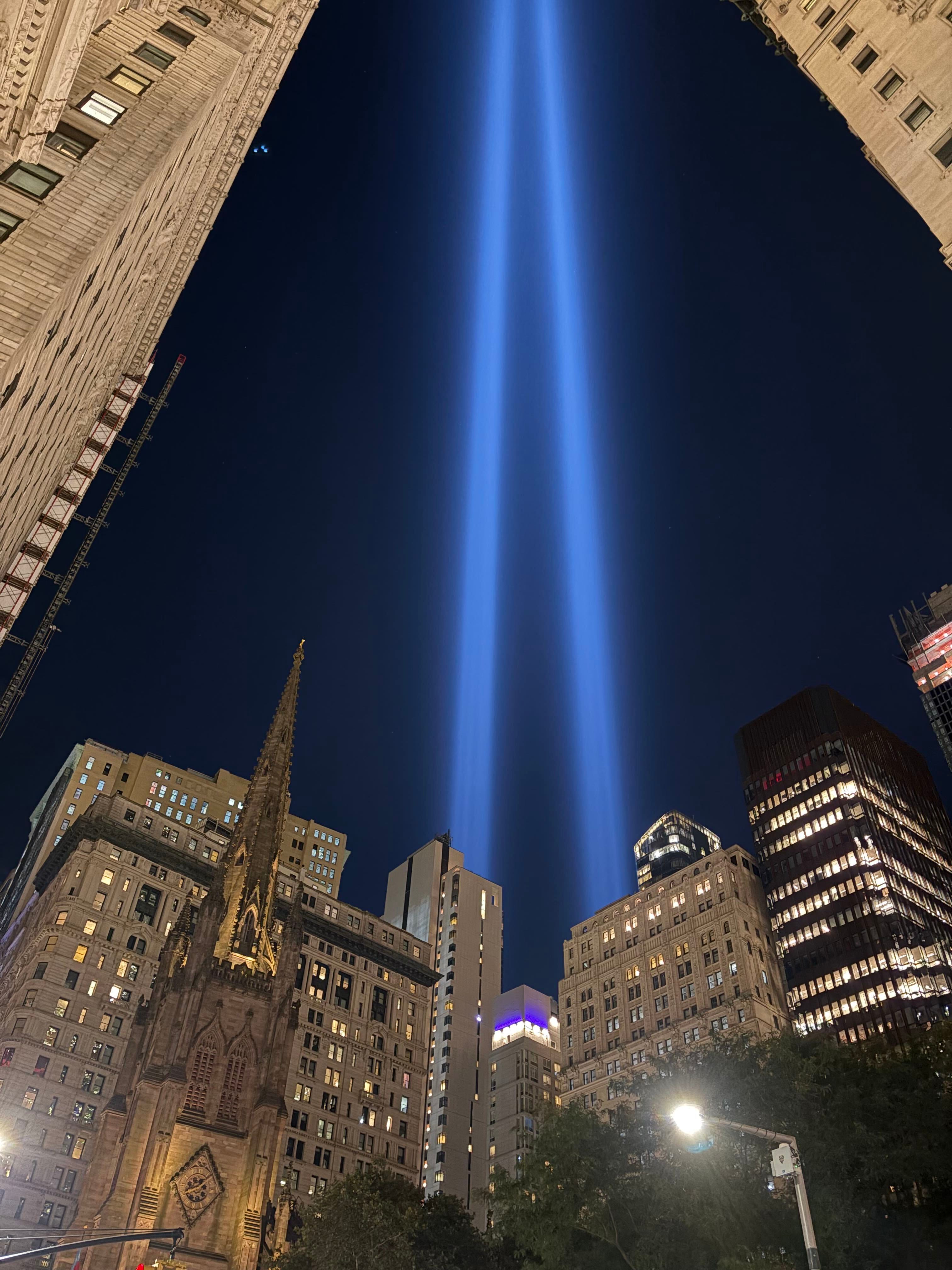
That morning remains so clear in my mind. How crisp the air was. My first conversation with Meg, who was on her way to LaGuardia for a flight that was supposed to be later that day. Our confusion at the news when the first plane hit, our minds refusing to comprehend. Our growing horror as the scale of the terror and loss became clear. The plume, the fear, the long trips home, lining up to give blood. The stunned, communal sense of grief.
Over the following days, we learned the heart-wrenching stories of so many beautiful people. Like Dave Fontana, an FDNY firefighter who both lived and worked in Park Slope, who had run into the towers to save people. Like FDNY Chaplain Father Mychal Judge, who worked with AIDS patients and homeless New Yorkers, who lived and worked in Chelsea, and was one of the first responders killed. Like Manuel Asitimbay, an immigrant from Ecuador who was so proud to work as a cook at Windows on the World, whose family we were able to house in a Fifth Avenue Committee apartment. And many thousands more.
Twenty-five years later, the work of memory starts with their stories. That’s why the 9/11 memorial ceremony each year is so powerful, just the reading of their names, often by young people who never knew them (the fact that Trump won’t attend because he’s not allowed to give a speech is so revealing). If you want to get to know some of their stories better, one resource is StoryCorps’ September 11th initiative, which features interviews about hundreds of those lost (and is currently gathering many more).
Remembering those first-responders is especially important. Their unhesitating courage to risk their lives to save the lives of their neighbors brought New Yorkers together in those agonizing days of grief – and it still does decades later, in a time when we struggle as a society for shared heroes. That’s why I have participated for many years in the Tunnels to Towers Run (this year it’s on Sunday, 9/27) to honor their memory. It’s a crowd that doesn’t mostly share my politics; of course, those heroes didn’t ask about anyone’s politics.
Honoring the sacrifice of people who rushed to the rubble many days after that one is why it was so important to open up the City’s archives about air quality. Mayor Mamdani deserves real credit for finally doing so.
As we consider what to remember, twenty-five years later, we also have to grapple honestly with what came next – including the things that started to divide us. Anger at the attackers too soon, and too often became indiscriminate rage at Muslims, or Sikhs who were mistaken for Muslims. Sadly, that sort of Islamophobia is still with us, from the so-called leaders who have sullied the memories of those who were killed with their racist, small-minded, divisive calls for Mayor Mamdani not to attend the 9/11 Memorial. I’m proud to live in a city that, 25 years later, has elected its first Muslim mayor, and proud to attend the memorial today alongside him.
And, of course, we have to grapple honestly with the catastrophic foreign policy and surveillance state responses by our country, especially the war against Iraq, in which hundreds of thousands of people were killed for nothing.
Those reactive, misguided choices squandered enormous sympathy for the U.S, which we might have used as a moment to build meaningful multilateral action for a safer, more humane world. Rather than learn those lessons, Trump has continued down this path, with his reckless, illegal war in Iran, and by weaponizing the surveillance state against hundreds of thousands of immigrants and refugees. Those choices have left our country isolated internationally, more so than at any time I can remember.
This, alas, is a lesson that Israel failed to learn as well, squandering the sympathy that much of the world (not all, no, but much) felt after October 7th. In these moments of collective trauma, the desire for collective revenge is understandable, even human. But it has disastrous results.
What would it take to focus on specific accountability for harm, rather than prejudicially attributing blame to whole groups of people? How can we implement careful rather than broad-net policies for security? How might we come to recognize that collective safety requires broadening the circle of humanity, rather than narrowing it?
As hard as those questions are, twenty-five years later, I think New York City has some lessons to teach. That feeling of solidarity we felt in the wake of the attack, as people rushed to give blood, to comfort those grieving. Responses like the September 11th Families for Peaceful Tomorrows, or the Children of Abraham Peace Walk, which I joined last night, that brought communities together across divides.
The debate around rebuilding was not a simple one. But it brought people together to work through different ideas, and twenty-five years later, Lower Manhattan is a thriving set of communities, places where diverse New Yorkers live and work and pray and raise families, remembering the past but also building vibrant futures. (Countless people made that work possible – I want to especially recognize Dan Doctoroff, whose vision and tenacity continues to inspire so many of us).
And this summer, from the way we celebrated in the streets of Lower Manhattan after the Knicks championship, and then welcomed people from across the globe for the World Cup (many of whom came for the games, but so many of whom already live here), reminded us, and the whole planet, how profoundly we love this diverse, welcoming, cosmopolitan, multi-faith, multi-racial democratic city.
Amidst the memory of grief and tragedy, at a time of so much division and strife, those examples of service and sacrifice and solidarity in our beloved city shine even more brightly than the exquisite Tribute In Light.
May their memory be a blessing.
—-
The firehouses serving New York’s 10th Congressional District lost nearly 100 firefighters twenty-five years ago today, more than a quarter of the FDNY’s 343 losses.
Manhattan
Engine 4 / Ladder 15 — 42 South St, Financial District — 12 killed, the highest toll of any single company
Squad 18 — 132 W. 10th St, West Village — 7 killed
Engine 24 / Ladder 5 / Battalion 2 — 227 Sixth Ave, Greenwich Village — 11 killed
Ladder 3 / Battalion 6 — 108 E. 13th St, East Village — 11 killed
Engine 33 / Ladder 9 — 42 Great Jones St, East Village/NoHo — 9 killed
Engine 10 / Ladder 10 (”Ten House”) — 124 Liberty St, Financial District, directly across from the WTC — 6 killed
Engine 6 — 49 Beekman St, Lower Manhattan — 3 killed
Engine 5 — 340 E. 14th St, East Village — 1 killed
Engine 3 / Ladder 12 / Battalion 7 — 146 W. 19th St, Chelsea — 4 killed
Brooklyn
Squad 1 — 788 Union St, Park Slope — 12 killed, Dave Fontana’s Squad, and the highest toll of any single company
Engine 205 / Ladder 118 — Middagh St, Brooklyn Heights/DUMBO (”Fire Under the Bridge”) — 8 killed, six of them riding together on the same rig across the Brooklyn Bridge
Ladder 101 / Engine 202 / Battalion 32 — 31 Richards St, Red Hook — 7 killed
Engine 279 / Ladder 131 — 252 Lorraine St, Red Hook — 5 killed
More have been lost in the years since, due to 9/11-related illnesses. We grieve and remember them all.